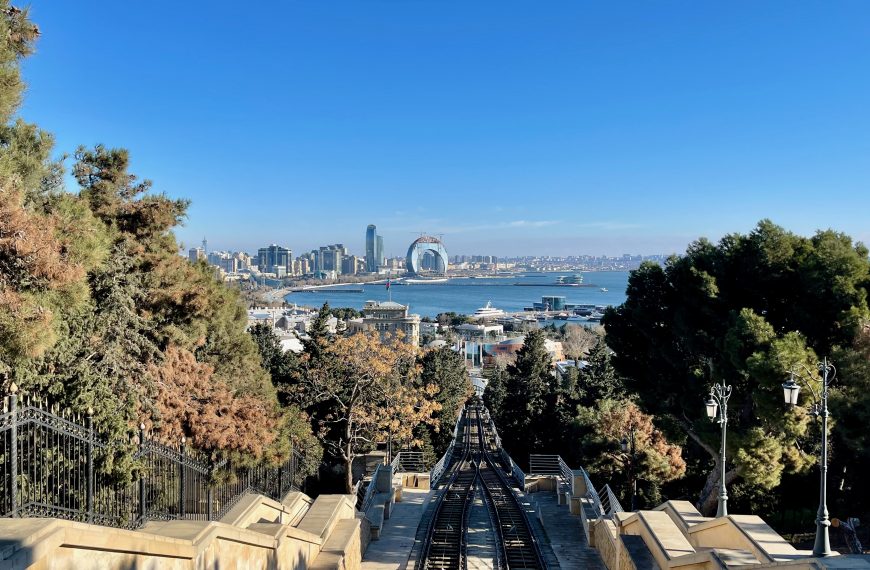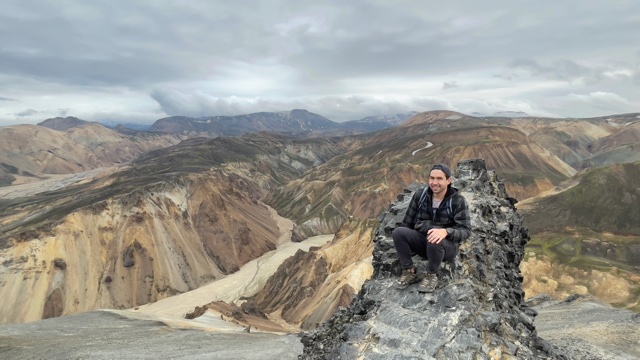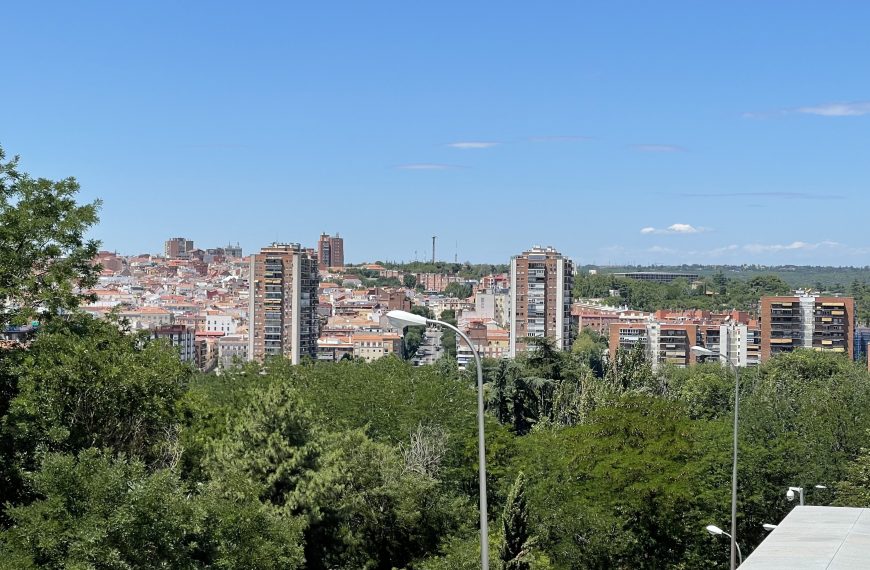


When we sat down in our rental car, the time was 9:48 am. We had just landed from a short, but overnight, flight and now were laying our eyes for the first time on the Land of Fire and Ice, Iceland.

Our bodies were confused; it was morning here, but the night had been abbreviated. We had left Minneapolis at 9:30 pm following a 2 hour delay and landed just 5 hours later in Reykjavik where the local time was 8:00 am. Lie-flat seats were not offered on this route, so we settled for cheap economy class seats. All of this is to say that we were physically and mentally tired. Thankfully, we had planned for this and were expecting an easy day in the capital city before beginning a road trip around the perimeter of the Iceland island.
The Capital Region
Our Icelandic experience began at the Blue Lagoon, one of the most well-known tourist attractions in the country. It’s a massive hot spring filled with comfortable water and vast amounts of Sulphur. Visitors place the sulphur on their face like a geological mask and say they feel its healing effects after just ten minutes. Further, the Blue Lagoon is just about twenty minutes from the airport, making it a popular place to kill time during a transatlantic layover or on the morning before a flight home.

Following our time at the Blue Lagoon, we ventured farther from the airport and increased our ambition a bit. We had heard of Fagradalsfjall, which has been actively erupting since March 2021. The volcano was a unique blessing in that it was close to population centers and easily accessible, but was erupting slowly, passively, with a fizzle, rather than a massive explosion, making it safe to visit and view. Our goal was to witness the brilliant lava for ourselves.
We found ourselves increasingly tired and even took a short nap in the car. We set out on what we expected to be a short jaunt to the top of a nearby hill to see the volcano. This was our first Icelandic lesson: distances in Iceland are almost never as short as they seem. We would come to find that distances, both for hiking and for driving, were often quite long by our standards even if guidebooks and websites suggested they were short. An hour later, we were still moving from hill to hill in search of the volcano. We saw blackened ground, still warm from having been formed only very recently by the magma bubbling beneath us. We saw webcams, ostensibly set up to stream to the magnificent lava flows to the country and the world. What we did not see was the end of the trail.
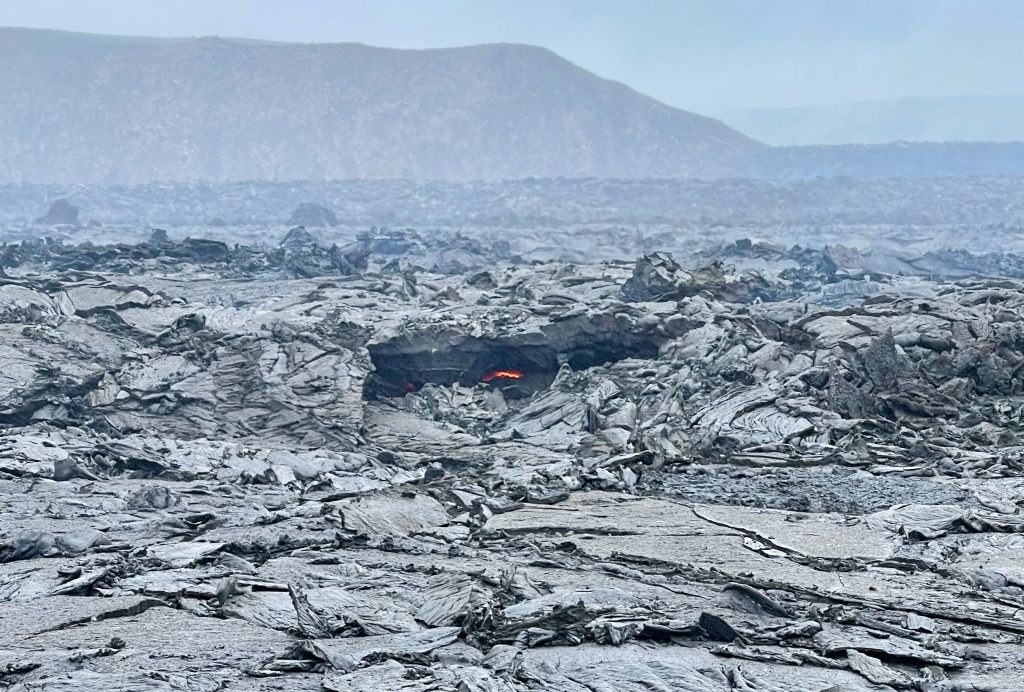
We expected a brief ascent of maybe a couple hundred feet. The hills weren’t steep, but they were tall and they were many of them. As we climbed further and further, the temperature dropped and the wind and rain began. Since we had planned a brief excursion, we hadn’t brought supplies with us and were woefully unprepared for the elements. We shivered tiredly standing next to the volcanic ash looking anxiously for lava. We overheard a police officer nearby advising other tourists that it would likely begin flowing again in about an hour. We spotted some lava bubbling from underneath mantles of rock. It wasn’t flowing strongly but it was there and we saw it: lava. With our mission as accomplished as it was likely to be for the foreseeable time, and while we were shivering and exhausted, we made our way back to the car, praying we managed to avoid twisting ankles or slipping off the sometimes icy hillsides. Eventually we managed to return to our car, make our way into the Reykjavik city center, and check into our hotel for much needed sleep.
Hiking in the West
The next day, our first true full day of exploration in Iceland, we awoke bright and early and began our road trip heading north from the capital. Our first stop was about an hour away and as we drove, we marveled at the landscapes we passed. It wasn’t so much that the Icelandic countryside was beautiful—at least, not in the way that people consider Hawaii for example to be unbelievably beautiful everywhere you look—but rather that there were so many distinct contrasts of unique ecosystems. One minute we’d see green grass stretching on a plain to the horizon and the next mountains with waterfalls down the side would punctuate the landscape.
We were on a mission to see one such waterfall, Glymur. But to get to it, we would need to drive 45 minutes down a gravel road, then begin what would become a fantastic four mile hike.
The hike felt like we were entering the landscape of Jurassic Park. The fauna was smaller, but the flora was every bit as magical. Mountains in brilliant shades of green stretched around us in all directions, punctuated by streams of bright blue.

In fact, not far after the start of the trail we had to pass through a stream. We ran into another hiker who was pondering the best way to get across while staying dry. The stream was shallow, but very wide with fast-flowing water. There was a rebar line across the water at roughly shoulder height and a precarious log perched purposefully across about half of the width of the waterway. It was clearly easier and drier to cross the stream using this makeshift bridge, but neither we nor the other hiker were convinced it was safer than committing to the icy waters and crossing on the stream bed barefoot. In the end, we didn’t do that and used the log, and we all made it safely across.
On the other side of the stream the trail shot upwards as we passed through a cave and around corners with lookout points in the valleys far below. We saw many waterfalls on the mountainside, but none were the brilliant Glymur that we sought. The higher we climbed, the cloudier it became as we ascended into the fog. At one point, we found a clearing with Glymur visible far below us, but fading shyly into the depths of the fog.

It became harder and harder to see anything at all as we continued our climb. When we arrived at the climax of the hike, where we should have been marveling in the up-close beauty of the waterfall, instead all we could see was our hands in front of a background of grey. This was our second Icelandic lesson: the weather here can change quickly and unpredictably.
Now at the hike’s peak, we were confronted by our next challenge: a fast-flowing river that reached nearly to waist height. This time, there was no log to help us across. We trudged slowly across the riverbed due to the rocky and unever bottom and the strong current. By the time we reached the other side, our feet were numb from the iciness of the water, but we had made it. We replaced our shoes and socks and allowed our feet to warm before continuing on our way. This leg of the trail left the sights entirely to our imagination as it was entirely too foggy to see anything, including most of the trail markers. We used GPS to navigate back down the mountainous landscape and, when we had descended far enough that the fog lifted, we rejoiced when we could see the parking lot. The weather hadn’t cooperated completely, but it was good enough that we were able to celebrate our first hike and first spectacular geologic feature in Iceland.
As we returned to the car and continued our road trip, we found ourselves longing for a bite to eat. We stopped at a restaurant, which was also a hotel, and went inside, only to learn from a rather gruff caretaker that the restaurant was closed for the afternoon and wouldn’t open until dinner, nearly two hours later. We continued on our way until we spotted another restaurant, with a brightly lit neon OPID sign in the window, Icelandic for OPEN. We stepped inside and were greeted by a caretaker who gestured lovingly for us to sit anywhere we like in the large open-air room. She rushed over some menus and explained that we could partake in an unlimited soup buffet or order from an ala carte menu. We chose the menu and the food was fantastic. The restaurant caretaker introduced us to “cocktail sauce” which is Iceland’s name for what we might call secret sauce, or a mix of ketchup and mayonnaise. We sought out cocktail sauce at each restaurant we stopped at henceforth. We also indulged in a rich cake before hitting the road again.
Our next stop was an abandoned lava cave. These caves form when lava from a volcano dries and hardens over time, and the insides sometimes fall away, forming long tunnels and caves. One nearby, in northwestern Iceland, has become a tourist hot spot after a tour company installed a footbridge and electric lighting and began charging for visitors to explore it in the company of an experienced guide. The cave we went to, on the other hand, had no such modern luxuries. There was merely a single sign pointing to an ominous hole in the rocks. We climbed slowly down over extremely uneven terrain. The rocks were sharp and poked our feet. The smaller ones frequently moved as we shifted our weight from leg to leg to walk forwards. As we rounded a curve and left the entrance hole behind, it was pitch black. With our flash lights off, we couldn’t see anything at all. We quickly became spooked by the experience; I swore I heard women laughing in the distance, but if they existed they ignored me when I called out to them. We decided it was best to get out of the cave as quickly as we could.

That evening, we began to see the “fire” part of the Iceland’s fire and ice theme as we passed another large hot spring en route to our hotel and saw yet another hot spring just across the street from where we were staying. Bathing in geothermal hot springs is truly an Icelandic pastime.
The next day we traveled into the Snæfellsnes Peninsula which is the next peninsula north of the capital region. Here, we visited a small town called Búðir, where we embarked on another hike which began near a historic church and stretched around a dormant volcano and nearly to the next village about five miles away. We took a slight detour to summit the dormant volcano. Based on the footprints, it was clear we weren’t the only one with the idea, but without a formal trail it was challenging to find the best way to scale this beastly natural formation. The route we chose felt steep and, at times, narrow. It was uncomfortable, but the views when we reached the top made the challenge worth it in every way. We could see for miles around, from the ocean in one direction to the buildings the next town over in the other, and the moonlike landscape in between. The hike continued through this lunar lookalike, punctuated by tiny craters filled with vegetation. We were disappointed when the trail simply ended at a fence and we had to turn around; there was no payoff on this trail besides the unofficial lookout from the top of the volcano at the very beginning of the expedition.

Road Trippin!
Iceland’s tourism industry has popularized the idea of the Ring Road, which traverses the perimeter of the island, as a way of seeing most regions of the small country. But as we learned, there are still vast swaths of uninhabited area between the various population centers of tourist regions. Although punctuated with some interesting stops, the next 36 hours of our trip would be dominated by time behind the wheel.
Following our hike at Búðir, we jumped into the rental car for a four hour drive to our hostel for the evening. Our hostel was off the Ring Road, a bit into the remote Westfjords region. We hoped to explore this region more extensively, but lacked the time and weren’t sure we wanted to be in the car even longer given just how much extra driving it would entail. By the time we made it to our hostel, the sun had fallen and we were exhausted. The innkeeper gave us a tour of the facilities and showed us to our room. There were other travelers in the hostel common area, but we didn’t take advantage of the opportunity to chat with them, both on account of being tired and because quarters were tight and they were maskless, and we hadn’t taken a covid test for re-entry to the United States yet, so we thought it best to be overly cautious until we had a negative test result. We took a shower and fell asleep quickly.
In the morning, we naturally woke up with the sunrise. We had another five hour drive ahead of us, but at the innkeeper’s recommendation, first we took a walk about ten minutes down to the seashore. We wandered through a sheep pasture and while the animals are everywhere in Iceland, nowhere did they let us get as close as we did here. When we arrived at the shore, we were greeted by a series of magnificent sights: our first black-sand beach, a naturally formed totem pole sticking out of the water, and…SEALS! An entire colony of seals sat on a sand bar just off shore. As we wandered around the beach, one in particular swam nearby, following us and keeping his eye on our every move. This walk was a magical way to start our morning drive.

Spot the seals! They may look distant in this photo, but relative to where we were standing on the beach, they were quite close and we had a remarkably good view. Westfjords, Iceland. 
Black sand beach with a naturally occurring totem pole just off shore, Westfjords, Iceland.

Back in the car, we raced down the remote gravel roads of the Westfjords, anxious to make miles. As I drove just a bit too fast off the edge of a bridge and back onto gravel, the car bounced and suddenly we heard a vibration coming from the trunk. As I slowed down, the vibration only got louder. We were petrified that something had gone horribly wrong with the car. Could we even get help out here so far away from population centers? Certainly not quickly; this could be the end of our trip! We got out of the car, now at a complete stop, still hearing the vibration. Thinking it might be the rear door not completely latched, we opened the hatch with the hope of latching it correctly. At that point, we realized the culprit was an electric toothbrush that had apparently been triggered by the bump. Crisis averted!

Back in our vibration-free car, we traveled across the rugged northern region, chatting and listening to podcasts and music. One of the most unique facets of Icelandic travel is the number of unique regions. Some places, like Hawaii, present the most beautiful scene in every direction you look. In contrast, I found that some of Iceland was beautiful but other areas were downright ugly. And part of the beauty and the appeal of this road trip was the juxtaposition of these scenes so rapidly changing as we drove along.
Iceland’s Ring Road is one of its most important routes and the highest priority route to keep open and cleared all year long, even during strong winter storms. It’s the most heavily trafficked corridor in the country and most towns are within a few miles of it. Even so, the Ring Road is almost entirely two lanes (single lane each direction) and most bridges (and there are many!) are single lane only (i.e. opposing directions need to take turns). Traffic is generally light and infrastructure is limited. We had been told that gas station hot dogs are excellent quality and quite cheap in comparison to other Icelandic restaurants, but the gas stations that we passed in this portion of the country didn’t offer much more than one or two lonely pumps just off the road. There was no awning for weather protection, barely a sign, no bathroom, and certainly no building serving hot dogs. We had strong desolation vibes.
After a morning of driving, in the afternoon we reached the harbor town of Husavik where we stopped to stretch our legs and take in a whale-watching tour. We climbed aboard a boat, sailed into the Husavik harbor and further into the Arctic Ocean where our crew set about looking for the magnificent animals. It wasn’t long before they directed our collective gazes to the horizon where a beautiful blue whale came up for air before diving down. Our boat maneuvered closer and we were quite close the next time she came up to breath. We followed this pattern a few more times as the whale would take a breath, dive into the ocean, then come up again. It wasn’t the largest whale I had ever seen, but it was certainly the closest I’ve ever been to one of these magnificent animals.

Following our stop at Husavik, we made another stop to see Dettifoss Falls, considered the most powerful waterfall in Europe. One of the awesome features of this waterfall was just how close we could get. We stood in the mist and took in the sight of Mother Nature’s power. Unfortunately, we couldn’t stand still for long as we became increasingly molested by hordes of tiny flies. We decided to press on to our hotel in Myvatin just a bit prematurely.

Myvatin is a vacation destination for many Icelanders who live full time in Reykjavik and to that end the town punches above its weight in terms of relatively nicer hotels. To be clear, these are not five star palaces like you might find in places like Dubai or Bangkok, but compared to the hostel we stayed at the previous night, or even the full-service hotels we had stopped at to date, the accommodations in Myvatin were clearly one step higher.
Unfortunately, the fly problem didn’t get better here. The front desk receptionist explained that they are vital to the ecosystem in this area as they feed larger animals like frogs which also help to control more nefarious species including mosquitoes. The flies are incredibly annoying but ultimately harmless. In the receptionist’s words, “We get used to it and put up with them for the good of the rest of the ecosystem.” We mostly stayed indoors and kept our hotel window closed for the night.
The next morning, we visited another attraction near Myvatin, the Krafla Lava Fields. The lava fields featured hot sprints, but they were too hot to safely swim in; it was more akin to a geyser than a hot spring. We stared at its beauty, standing in the chilly Icelandic morning air while feeling the extreme heat wafting off of the geyser before us. The strong smell of sulfur emanated through the air and the fly hordes surrounded us. It was a unique but not altogether pleasant experience, and we left quickly.

Today was the tail end of our longer driving section. We had about six hours behind the wheel ahead of us this morning. Again, the landscape changed continuously. Today, we quickly noticed that we were descending. The Ring Road routed us down narrow streets on the edge of steep cliffs as we dropped towards sea level at an almost sickening pace.
We decided against filling our gas tank before leaving Myvatin because of the fly hordes. We knew we would need gas soon and Google showed a gas pump about 30 kilometers into our route, but the pump was nowhere to be found; it was merely a parking lot, a rest stop of sorts with a map and a picnic bench but no gas pump or even outhouse. We carried on, and this pattern repeated itself twice more. By now we were getting a little worried as our gas gauge read less than ¼ tank remaining. We would hit a town in 70 km with four gas stations available. We assumed in that case at least one of them would be real since it was an actual town. The car informed us that we had only 68 km of range remaining. We pushed forward, trying to ease the accelerator down and use gravity from the deceleration of the road in our favor. Thankfully, we made it to the gas pump, which this time was real, and filled up our car.
Our last stop along the extended over-the-road portion of our trip was a pair of attractions at the southeastern tip of the Icelandic island. Here, we saw Diamond Beach, one of the most famous black-sand beaches and so named for its numerous ice formations that resembled diamonds floating in the ocean and on up to shore; and the Glacier Lagoon, where the much larger ice formations holding together as full glaciers floated over flowing water.

The grey expanse of one of Iceland’s most famous black sand beaches. 
The beautiful juxtaposition of glaciers and snow with the pristine blue water and black sand beach in Glacier Lagoon, Iceland.
As the presence of all this ice may have suggested, this wasn’t the beach to strip down and get some sun. Here, it was COLD. When we embarked on our road trip earlier in the morning, it was forecast to be around 70 degrees Fahrenheit and we dressed appropriately in shorts and t-shirts. But here, we were the only visitors crazy enough to be so scantily clad as temperatures hovered just above the freezing mark. I grabbed a sweatshirt as we wandered around and admired the view.
Unlike Myvatin, the air here was clean and pure. There was no smell of sulfur, no hordes of flies…it felt like a cleaning cycle for my lungs as we breathed in the fresh air. The ice water from these glaciers is clean enough to drink; in fact, glacier melt is one source of Iceland’s famously pure fresh water. Bottled water simply isn’t a thing in this country where any river fed by the glaciers like these is completely safe to drink.
Our hotel for the night was nearby and had beautiful large windows looking into the northwards wilderness. Though the forecast for the Northern Lights to make an appearance was the best it had been on our trip on this night and at this location, sadly we weren’t able to see them. Exhausted from all the driving, we called it a night early once again.
The next day, things got more interesting and more extreme. In Part 2 of our epic Iceland story, read about how we drive across a river with no bridge, learn how we found ourselves hiking through a blizzard, and see what happens when we mistakenly fill our standard-petrol car with diesel.